“In range” does not always explain
why you still do not feel well.
Maybe your TSH is in range.
Perhaps levothyroxine has moved your numbers
in the right direction.
Yet you are still dealing with fatigue,
hair shedding,
feeling cold,
brain fog,
puffiness,
low stamina
or stubborn weight.
Or you keep wondering whether iron,
minerals,
nutrition
or something beyond the thyroid gland
deserves a closer look.
The goal is not simply more testing.
It is choosing the right level of investigation
and support to understand
what deserves attention next.
Better questions.
More useful context.
A clearer next step.
Fatigue
Feeling cold
Hair shedding
Brain fog
Puffiness
Low stamina
Stubborn weight
Not feeling like yourself
Fatigue
Feeling cold
Hair shedding
Brain fog
Puffiness
Low stamina
Stubborn weight
Not feeling like yourself
Look Beyond The Tick Box
If the bloods look reassuring
but your symptoms have not changed,
the investigation may need a wider lens.
Reference ranges are important.
But being inside an interval
does not automatically explain
why you still feel unwell.
And simply replacing conventional ranges
with narrower “functional” ranges
can still leave us chasing individual numbers.
My approach is to look at relationships
between results,
the pattern they create,
your symptoms
and the wider nutritional
and metabolic context.
That can include thyroid production
and conversion context,
iron,
nutrient availability,
energy availability,
liver and gut health,
inflammation
and recovery where relevant.
Your thyroid gland is one part
of a much wider system.
The investigation should reflect that.
Results + symptoms + history + nutritional context
A Different Way To Read The Picture
The value is not simply
having more markers.
It is knowing how to interpret
them in context.
I am not interested in finding a tighter range
simply so another number can be labelled
“sub-optimal”.
The aim is to recognise useful patterns,
understand the limitations of each test
and identify which areas deserve attention next.
01
Range → Context
Your numbers improved.
Why did your symptoms not?
TSH and thyroid hormone results
are important.
But if the numbers improve
while symptoms remain,
the useful question is
what else deserves consideration.
Rather than simply switching
to narrower ranges,
I look at relationships
between the markers
alongside symptoms,
history
and wider context.
The goal is not
a prettier lab report.
It is knowing
what deserves attention next.
02
Gland → Wider Thyroid System
Producing thyroid hormone
is only one part of the story.
The wider picture can include
thyroid output,
conversion context,
antibodies,
iron,
nutritional status,
liver and gut context,
recovery
and energy availability.
Reverse T3 is included
as an additional data point
where conversion is being considered.
It is not treated
as a stand-alone test
for stress or cortisol.
When the results look reassuring
but you still feel unwell,
we widen the lens.
03
Minerals → Wider Context
A mineral result is not always
as simple as high or low.
With HTMA,
I look at mineral patterns
and relationships
rather than automatically treating
every high result as excess
or every low result
as proven deficiency.
HTMA is considered
alongside symptoms,
diet,
history
and relevant blood testing.
It does not directly measure
intracellular mineral status.
HTMA adds another
nutritional lens.
It is not used
as a stand-alone diagnosis.
01
/ 03
Choose Your Starting Point
Choose the level of investigation
and strategy you need.
Each route includes personalised professional interpretation,
so you are not left trying to make sense
of a report on your own.
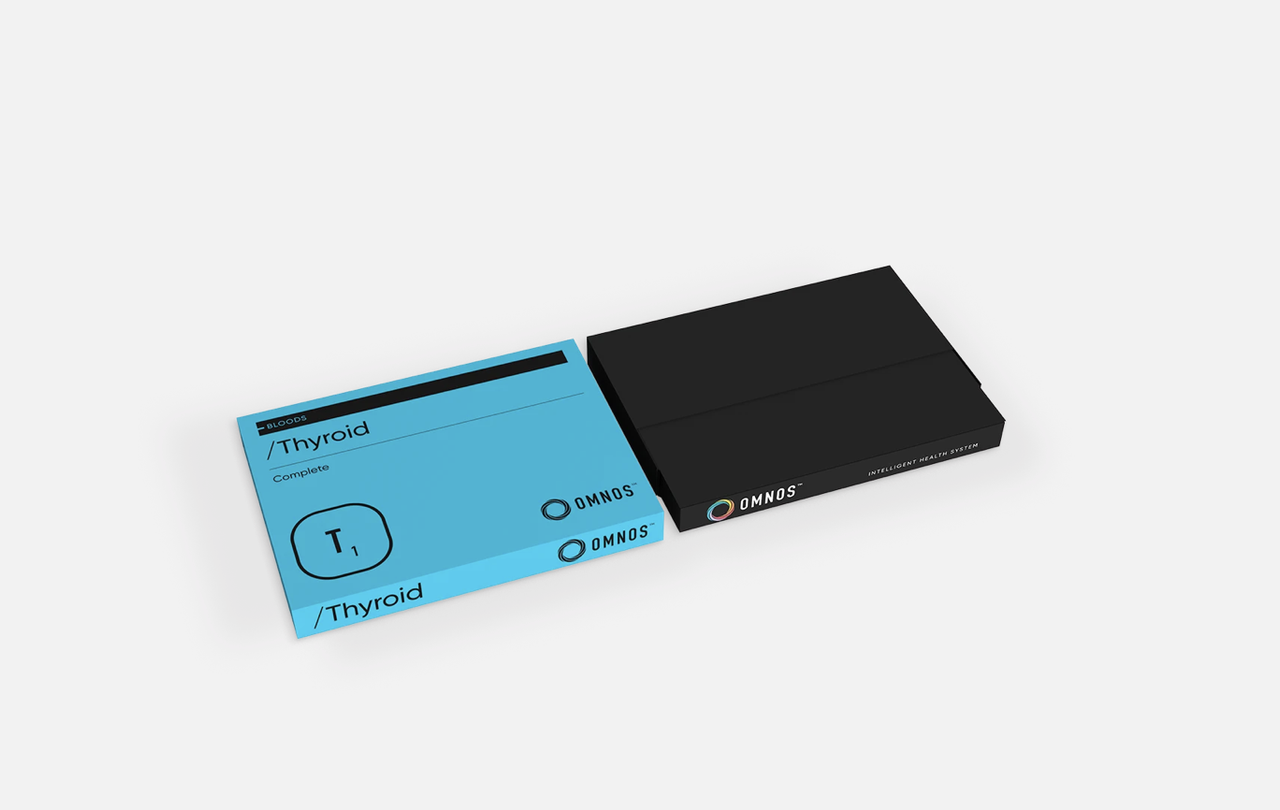
The £300 HTMA option focuses
on mineral and nutritional context.
The £595 Thyroid Lab Review
is the focused thyroid starter
with a 60-minute consultation
and personalised starter plan.
The £995 Comprehensive Thyroid Strategy
combines thyroid testing and HTMA
with a full 90-minute strategy consultation,
written roadmap
and 45-minute follow-up.
Mineral Investigation
HTMA + Personalised Consultation
£300
For those who want
a closer look at mineral
and nutritional context
without beginning
with a full thyroid laboratory panel.
Includes
Hair Tissue Mineral Analysis
Symptoms + health-history review
Mineral-pattern interpretation
Personalised consultation
Prioritised nutritional next steps
The interpretation difference
Rather than treating each mineral
as a simple high or low,
I consider the pattern,
relationships
and limitations of the test
within the wider context of you.
If thyroid symptoms
or other blood markers
need more direct investigation,
additional laboratory testing
may be appropriate separately.
HTMA is already included
in the £995 Comprehensive Thyroid Strategy
and in private coaching
where appropriate.
Understand your thyroid picture
and know where to start.
£595
For persistent thyroid symptoms
when you want a comprehensive thyroid panel,
professional interpretation
and a focused personalised starter plan.
Includes
Comprehensive thyroid laboratory panel
TSH, Free T4 + Free T3
Reverse T3
TPO + thyroglobulin antibodies
Professional pre-consultation analysis
Symptoms + health-history review
60-minute 1:1 consultation
Personalised starter plan
UK:
at-home thyroid blood draw is included.
Outside the UK:
phlebotomy is not included.
You will need to arrange
and pay for a suitable local blood draw.
What this option is for
This is the focused starter.
We review the laboratory picture,
discuss the findings together
during a 60-minute consultation
and identify the areas
that deserve attention first.
This is not a long-term coaching package
or a complete ongoing protocol.
It is designed to give you
clarity,
priorities
and a practical place to begin.
Go beyond the lab review
and build your personalised strategy.
£995
For those who want
the thyroid laboratory picture,
mineral and nutritional context
and a much more comprehensive
personalised starting strategy.
Includes
Comprehensive thyroid laboratory panel
TSH, Free T4, Free T3 + Reverse T3
TPO + thyroglobulin antibodies
Hair Tissue Mineral Analysis
Detailed pre-analysis
Integrated thyroid + mineral review
Full 90-minute 1:1 consultation
Personalised nutrition strategy
Personalised lifestyle priorities
Supplement strategy where appropriate
Written implementation roadmap
45-minute 1:1 follow-up
UK:
at-home thyroid blood draw is included.
Outside the UK:
phlebotomy is not included.
You will need to arrange
and pay for a suitable local blood draw.
HTMA itself does not require phlebotomy.
Why this goes further
This is not simply two test reports.
I bring the thyroid,
mineral,
symptom
and health-history picture together,
then use the 90-minute consultation
to build your personalised strategy.
You also receive a written roadmap
and a 45-minute follow-up
to review implementation,
answer questions
and refine your next priorities.
Not sure between £595 and £995?
The £595 Thyroid Lab Review is the focused starter:
comprehensive thyroid testing,
professional analysis,
a 60-minute consultation
and clear starting priorities.
The £995 Comprehensive Thyroid Strategy
goes significantly deeper:
thyroid testing + HTMA,
a full 90-minute consultation,
personalised nutrition and lifestyle strategy,
supplement recommendations where appropriate,
a written implementation roadmap
and a 45-minute follow-up.
Comprehensive Thyroid Testing
The question is not simply,
“Is my TSH normal?”
The purpose of broader testing
is to understand more of the thyroid story.
Are you producing enough thyroid hormone?
Is there a pattern suggesting
that conversion deserves attention?
Is physiological stress
or low energy availability
part of the picture?
Are symptoms suggesting
a mismatch between circulating hormone
and tissue response?
Or is thyroid autoimmunity
part of what we need to consider?
That is why I look at the pattern,
not simply one result.
Why We Test
Where in the thyroid picture
might the problem be?
Persistent thyroid symptoms
do not always raise
the same question.
A broader panel
gives us more information
to explore where attention
may be most useful,
rather than assuming
every woman has
the same thyroid problem.
01
Thyroid Output
Is the thyroid producing
enough hormone?
One question is whether
thyroid hormone production itself
appears sluggish.
TSH,
Total T4,
Free T4,
Total T3
and Free T3
help create a broader picture
of thyroid signalling
and circulating hormone availability.
I then consider that picture
alongside symptoms,
medication
and health history.
02
Conversion
Is T4 being converted
effectively into active T3?
Thyroid hormone production
is only one part
of the story.
Within my Pro-Thyroid framework,
I also look at patterns
that may make me interested
in T4 to T3 conversion
and the wider physiological environment
supporting that process.
This can lead us
to look more closely
at liver function,
digestive health,
nutrient availability,
energy intake
and the wider metabolic picture.
03
Stress + Reverse T3
Is physiological stress
changing the conversion picture?
Reverse T3
is included as an additional
piece of conversion context
within my framework.
I am interested
in whether a higher Reverse T3 pattern
sits alongside lower T3 availability,
under-fuelling,
illness,
inflammation,
poor recovery
or a higher physiological stress load.
I do not use Reverse T3
as a stand-alone test for stress.
I use it as one piece
of the wider metabolic picture.
04
Tissue Response
Is circulating hormone
translating into tissue response?
Sometimes the question
is not simply
how much thyroid hormone
is visible in the blood.
Within my approach,
I also consider
whether symptoms
and metabolic signs
suggest a mismatch
between circulating hormone
and how the body appears
to be responding at tissue level.
Basal temperature,
resting pulse,
energy,
cold intolerance,
recovery
and wider symptoms
form part of that conversation.
I consider this
as an interpretive physiological lens,
rather than diagnosing
thyroid receptor resistance
from a blood test alone.
05
Autoimmunity
Is the immune system
part of the thyroid picture?
TPO antibodies
and thyroglobulin antibodies
give additional information
when thyroid autoimmunity
is part of the picture.
This can be especially relevant
where symptoms persist,
thyroid markers have changed over time
or Hashimoto’s
is already known or suspected.
The antibody picture
is then considered
alongside thyroid function,
symptoms
and the wider health context.
The question is not simply
“Do you have a thyroid problem?”
It is:
where in the wider thyroid system
does the pattern suggest
we should look more closely?
Standard Vs Comprehensive
What changes
when we look
beyond the first-line screen?
Standard NHS thyroid testing
has an important role
in identifying
and monitoring thyroid disease.
My broader panel
asks a different question:
what additional patterns
become visible
when we look across
signalling,
hormone availability,
conversion
and antibodies together?
01
Typical NHS / GP First-Line Pathway
An important first-line
thyroid assessment.
Primary-care thyroid investigation
often begins with TSH.
Additional markers
may then be added
depending on the TSH result,
symptoms,
medication,
previous results
and clinical circumstances.
01
TSH
Commonly used
as the initial thyroid marker.
02
Free T4
May be added
depending on TSH
and the clinical picture.
03
Free T3
Usually used
in selected clinical circumstances
rather than routinely
for every hypothyroid assessment.
04
Thyroid Antibodies
TPO antibodies
may be investigated
where clinically appropriate.
NHS testing varies
according to symptoms,
medication,
initial results,
clinical circumstances
and local laboratory pathways.
This represents
a typical first-line pathway,
not every thyroid test
available through the NHS.
02
My Comprehensive Thyroid Panel
Eight markers.
One wider thyroid picture.
Rather than asking
one marker
to tell the whole thyroid story,
I use a broader panel
to explore relationships
across thyroid signalling,
circulating hormone,
conversion
and thyroid autoimmunity.
01
TSH
Thyroid-stimulating hormone
02
Total T4
Total circulating thyroxine
03
Free T4
Unbound circulating thyroxine
04
Total T3
Total circulating triiodothyronine
05
Free T3
Unbound circulating T3
06
Reverse T3
Additional conversion context
within my framework
07
TPO Antibodies
Thyroid peroxidase antibodies
08
Thyroglobulin Antibodies
TgAb
Not simply more testing.
More context.
The value is not
collecting the largest number
of thyroid markers.
It is understanding
what their relationships
may show together.
How I Interpret The Results
I don’t interpret
eight isolated numbers.
I look for the story
they tell together.
Your thyroid
does not work in isolation.
So I bring the laboratory picture
together with your symptoms,
medication,
health history,
basal metabolic signs
and wider physiological context.
01
Pattern Recognition
Markers in relationship,
not one at a time.
I look at the relationship
between TSH,
Total and Free T4,
Total and Free T3,
Reverse T3
and thyroid antibodies.
The aim is to understand
the pattern,
rather than judge
the entire thyroid picture
from one isolated number.
02
Symptoms + Metabolic Signs
The laboratory result
meets the woman.
Your blood results
are considered alongside
fatigue,
brain fog,
cold intolerance,
stubborn weight,
puffiness,
digestion,
recovery,
basal temperature
and resting pulse
within my Pro-Thyroid framework.
03
Where The Pattern Points
Output,
conversion,
tissue response
or autoimmunity?
I use the wider picture
to explore whether
the main area deserving attention
appears to involve
thyroid hormone production,
conversion and availability,
physiological stress,
tissue-level response
or thyroid autoimmunity.
04
Wider Physiology
Your thyroid
is not working
in isolation.
Where relevant,
I also consider
nutrition and mineral status,
energy availability,
liver and gut health,
inflammation,
estrogen metabolism,
stress,
recovery
and the wider cellular environment.
The goal is to decide
what deserves attention first.
More markers are not the strategy.
The strategy is knowing
what the pattern may be telling us,
what deserves attention first
and what to do
with that information.
Thyroid testing
is considered alongside symptoms,
health history
and existing medical care.
Reverse T3 is used
as an additional data point
within the wider conversion picture
and not as a stand-alone measure of stress.
Tissue sensitivity
is considered as part
of an interpretive physiological framework,
rather than diagnosed
from these blood markers alone.
This nutritional interpretation
does not replace NHS
or specialist assessment,
medical diagnosis
or prescribed thyroid medication.
Choose Your Starting Point
Now choose
how deeply you want
to investigate.
You do not need
to order every type of testing.
The options below
are designed for different questions
and different levels
of personalisation.