


If you’ve ever been told your thyroid blood tests are “completely normal” but you’re still dealing with fatigue, brain fog, weight gain, cold hands and feet, constipation, dry skin, thinning hair, low mood, or a persistently low body temperature, whilst its not pretty your not on your own.
It’s a question many people ask me:
If my thyroid tests are normal, why do I still feel like I have an underactive thyroid?
The answer isn’t always straightforward, but it raises an important question:
Are standard thyroid blood tests measuring everything that matters?
Before we dive in, let’s be clear: thyroid blood tests are incredibly valuable. They have transformed the diagnosis of thyroid disease and remain an essential part of modern medicine.
However, useful doesn’t necessarily mean complete.
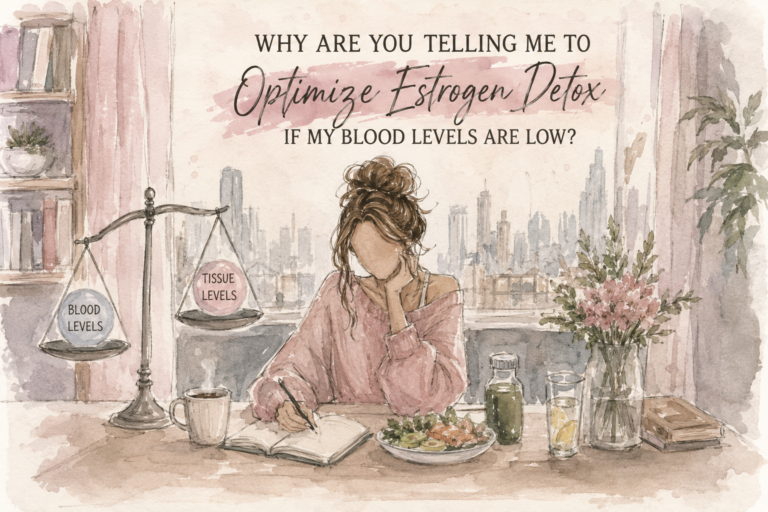
The Difference Between Thyroid Hormones in Your Blood and Inside Your Cells
The primary purpose of thyroid hormones isn’t simply to circulate through your bloodstream.
Their real job is to enter your cells, regulate metabolism, and control energy production throughout virtually every tissue in your body.
Your bloodstream is simply the delivery system.
Your cells are where the work actually happens.
Think of it like a delivery truck
Imagine checking the coal or wood level in a train engine.
The engine may be full.
This doe not mean its burning or you will arrive at said destination does it?
The roads could be blocked.
The driver might never arrive.
The packages might never be unloaded.
Looking at the fuel tank tells you something useful, but it doesn’t tell you whether the delivery has actually been completed.
Thyroid hormones work in a remarkably similar way.
A blood test tells us how much hormone is circulating in the bloodstream, but it doesn’t directly measure:
-
How much thyroid hormone is entering your cells
-
How efficiently inactive T4 is converted into active T3
-
How well your tissues are responding to thyroid hormone once it arrives
These are important distinctions because thyroid function is considerably more complex than many people realise.
T4 vs T3: Why the Active Thyroid Hormone Matters
Your thyroid gland produces primarily thyroxine (T4).
T4 is often described as a storage hormone or prohormone because it has relatively little biological activity on its own.
Most of the body’s metabolic work is carried out by triiodothyronine (T3), the biologically active thyroid hormone.
Once inside the cell, T3 binds to thyroid hormone receptors in the nucleus, influencing the expression of hundreds of genes involved in:
-
Energy production
-
Mitochondrial function
-
Heat generation
-
Heart rate
-
Brain function
-
Muscle strength
-
Digestion
-
Hormone production
-
Fertility
-
Skin health
-
Hair growth
Virtually every system in the body depends on adequate T3 activity inside cells, not simply circulating thyroid hormone in the bloodstream.
Tissue Thyroid Status: Why Blood Tests Can’t Tell the Whole Story
Researchers often distinguish between circulating thyroid hormone and tissue thyroid status.
Different organs regulate thyroid hormones differently.
The brain, liver, skeletal muscle, heart and brown fat all contain specialised enzymes called deiodinases, which determine how much T4 is converted into active T3, or into reverse T3, an inactive form.
This means one tissue may have excellent thyroid hormone activity while another may not.
As a result, blood tests cannot perfectly describe thyroid hormone activity throughout every tissue in the body.
This isn’t an alternative medicine concept.
It’s well-established thyroid physiology.
Modern research recognises that thyroid hormone regulation is highly tissue-specific and that standard blood tests cannot fully capture thyroid hormone signalling in every organ.
Why Is TSH the Main Thyroid Blood Test?
To understand why TSH (thyroid stimulating hormone) became the cornerstone of thyroid testing, it’s helpful to look back at the history of thyroid medicine.
Before sophisticated laboratory testing existed, doctors diagnosed hypothyroidism primarily through careful clinical observation.
They assessed:
-
Symptoms
-
Reflexes
-
Pulse rate
-
Skin texture
-
Cholesterol
-
Basal metabolic rate (BMR)
Because hypothyroidism is fundamentally a condition of slowed metabolism, measuring metabolic function made intuitive sense.
The Role of Basal Body Temperature
During the 1940s and 1950s, physicians such as Dr. Broda Barnes popularised measuring waking basal body temperature as an indirect indicator of thyroid function.
His reasoning was simple.
Since thyroid hormone plays a major role in heat production, a chronically low waking temperature, especially when accompanied by classic hypothyroid symptoms, might suggest reduced thyroid function.
Today, basal body temperature remains popular in some integrative health circles.
However, it’s important to recognise that body temperature can also be influenced by:
-
Illness
-
Calorie intake
-
Sleep quality
-
Infection
-
Menstrual cycle phase
-
Environmental temperature
For that reason, body temperature should never be interpreted in isolation.
The Rise of TSH Testing
Everything changed during the 1970s and 1980s when laboratories developed increasingly sensitive tests capable of measuring TSH.
TSH is produced by the pituitary gland and responds to circulating thyroid hormone levels.
It quickly became an excellent screening tool because:
-
Small changes in thyroid hormone often produce large changes in TSH.
-
Testing was inexpensive.
-
Results were highly reproducible.
-
Overt hypothyroidism could be detected much earlier than before.
Guidelines gradually shifted toward using TSH as the primary marker for diagnosing and monitoring hypothyroidism.
This undoubtedly improved care for millions of people.
However, there was an unintended consequence.
As laboratory testing became more sophisticated, clinical observation became less central.
Instead of asking:
“How does this person function?”
the focus increasingly became:
“Does the blood test fall within the reference range?”
Those aren’t always the same question.
Why Do Some People Still Have Symptoms With Normal Thyroid Blood Tests?
Some people continue to experience symptoms despite having a normal TSH and free T4.
Endocrinologists recognise this phenomenon, although opinions differ regarding the underlying cause.
Sometimes symptoms are due to unrelated conditions such as:
-
Iron deficiency
-
Vitamin deficiencies
-
Sleep disorders
-
Depression
-
Chronic illness
-
Autoimmune disease
However, researchers are also investigating whether differences in:
-
Thyroid hormone transport
-
Deiodinase activity
-
Tissue sensitivity to thyroid hormones
may contribute to persistent symptoms that aren’t reflected in routine blood tests.
Research into tissue-specific thyroid hormone signalling continues to evolve.
Importantly, this doesn’t mean thyroid blood tests are wrong.
It simply means they have limitations.
Like every laboratory investigation.
Blood glucose cannot tell us everything about insulin sensitivity.
Serum cortisol cannot tell us everything about cortisol activity inside tissues.
Similarly, thyroid blood tests cannot directly measure thyroid hormone action within every cell of the body.
Can Body Temperature and Pulse Rate Provide Additional Clues?
Ultimately, thyroid hormones exist to regulate metabolism.
One of the clearest signs of metabolism is heat production.
Many people with reduced thyroid function report:
-
Feeling cold all the time
-
Cold hands and feet
-
Difficulty warming up
-
Low waking body temperature
Again, these findings are not diagnostic on their own.
But when they occur alongside multiple classic hypothyroid symptoms, they may provide useful clinical context.
The body is constantly giving us information.
Good medicine has always involved listening to that story, not simply interpreting laboratory numbers.
Ray Peat’s Perspective on Thyroid Function
Physiologist Ray Peat offered a different perspective on thyroid assessment.
He argued that body temperature, pulse rate, energy production and overall metabolic function often provide meaningful insights into thyroid physiology alongside laboratory testing.
Whether or not one agrees with all of his conclusions, his broader point remains thought-provoking:
Hormones exist to change physiology, not simply to produce numbers on a laboratory report.
A perfectly normal blood test means little if the physiological processes those hormones are designed to regulate are not occurring effectively.
The Bigger Picture: Blood Tests Are One Piece of the Puzzle
None of this suggests laboratory medicine should be abandoned.
Quite the opposite.
Blood tests remain an essential part of diagnosing and managing thyroid disease.
But they work best when interpreted alongside:
-
Symptoms
-
Medical history
-
Physical examination
-
Body temperature
-
Pulse rate
-
Overall clinical picture
Each provides a different piece of the puzzle.
Perhaps the biggest lesson is this:
We should avoid reducing complex biology to a single laboratory value.
A person is not their TSH.
A person is not their free T4.
A person is not even their free T3.
A person is an integrated physiological system.
The goal shouldn’t simply be to normalise blood test results.
The goal should be to restore health, function, and quality of life.
The laboratory can guide us.
But it cannot replace listening to the patient sitting in front of us.
Because ultimately, thyroid hormones don’t exist to produce good blood test results.
They exist to help us:
-
Think clearly
-
Stay warm
-
Produce energy
-
Move well
-
Recover effectively
-
Live fully
And perhaps that’s the most important reminder of all:
Treat the patient, not just the laboratory report.
Medical disclaimer
This article is intended for educational purposes only and should not be used to diagnose or treat any medical condition. If you have persistent symptoms suggestive of thyroid dysfunction, discuss them with a qualified healthcare professional. Thyroid blood tests remain an essential part of diagnosis and should always be interpreted in the context of your medical history, symptoms, examination findings, and other appropriate investigations.